In the field of geological exploration, there is a saying that everyone has heard—“The quality of ...
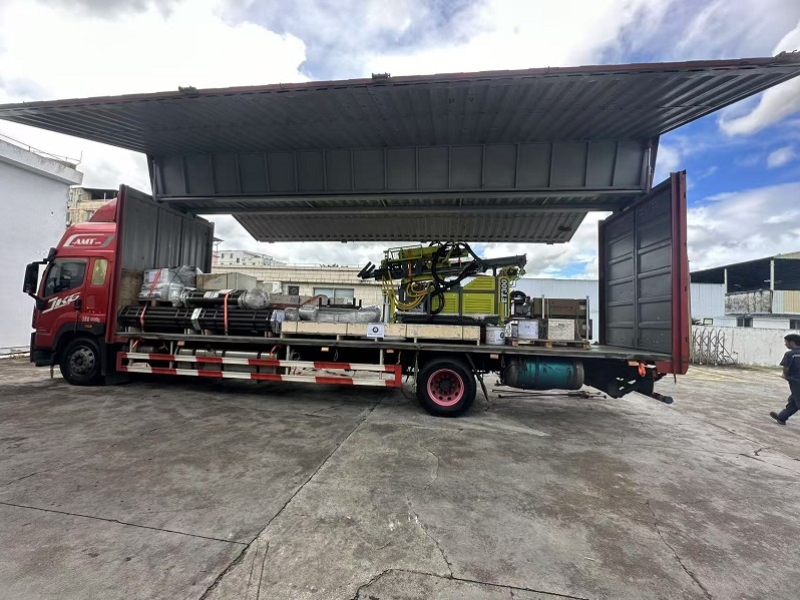
Drillmaster core drilling rig shipped to Africa, and this machine will assist the customer in soli...

It's not our first time to CTT. Hope we can meet you here this time.Booth No.: #3-425Date:...
In the field of geological exploration, there is a saying that everyone has heard—“The quality of the core determines the quality of the investigation.”
Whether in mineral prospecting, geological structure studies, or geotechnical sampling for major infrastructure projects, core samples are the most direct and reliable carrier for obtaining real subsurface information. Compared with indirect detection methods such as electrical surveys, geophysical methods, or sonic logging, core samples providetangible, measurable, and preservable first-hand evidence, crucial for identifying formation structures, lithology, weathering degree, fracture development, water-bearing characteristics, and other key parameters.
However, obtaining core samples that truly “preserve the original condition of the formation” is far from easy. During drilling, rotation, vibration, cutting, mud flushing, and lifting introduce various forces; if not well controlled, the core may suffer from:
Structural disturbance: bedding, fractures, and interlayers become damaged.
Reduced integrity: broken cores, missing segments, or empty barrels.
Layer mixing: upper and lower strata become confused, affecting geological interpretation.
Distorted physical properties: compression and extrusion alter mechanical parameters.
These issues not only lower core fidelity but may directly lead to geological misjudgments. For example:
Misidentifying bearing layer depth in foundation investigations.
Over- or under-estimating ore grade in mineral exploration.
Misinterpreting fracture water-bearing capacity in hydrogeology.
Overlooking weak layers or faulted zones in slope engineering.
The more “undisturbed” the core, the more accurate the exploration; the more distorted, the higher the risk.
Hence, a crucial question arises:
How can we keep the core as intact and undisturbed as possible throughout drilling, cutting, collecting, and lifting?
The answer is not a single powerful component, but rather a coordinated system:
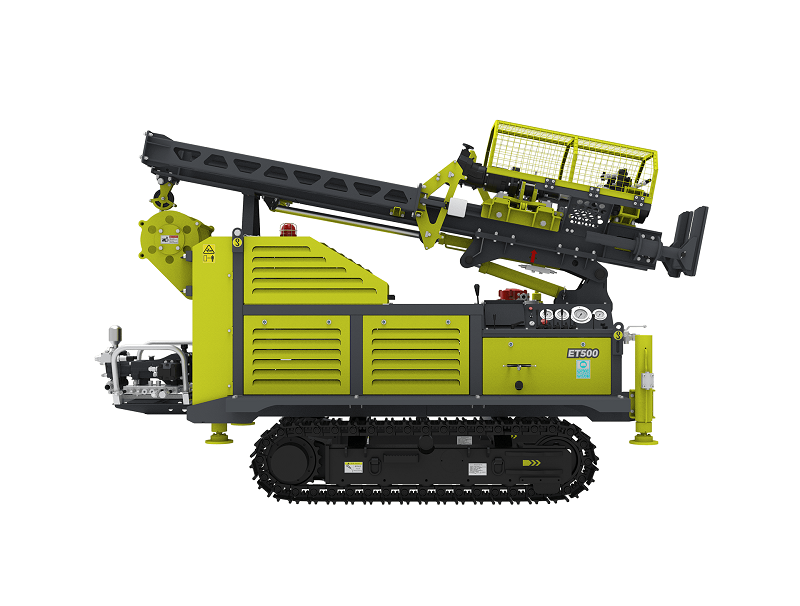
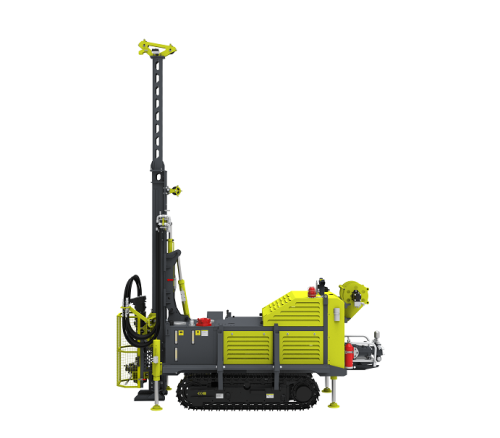
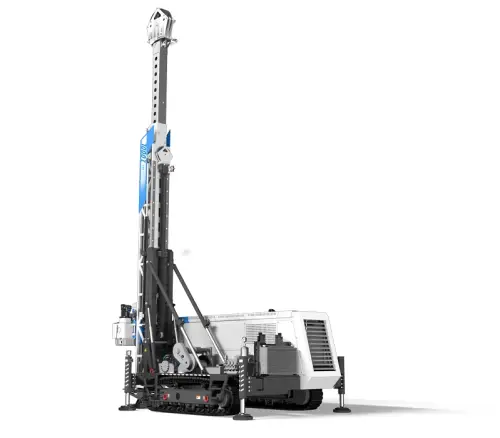
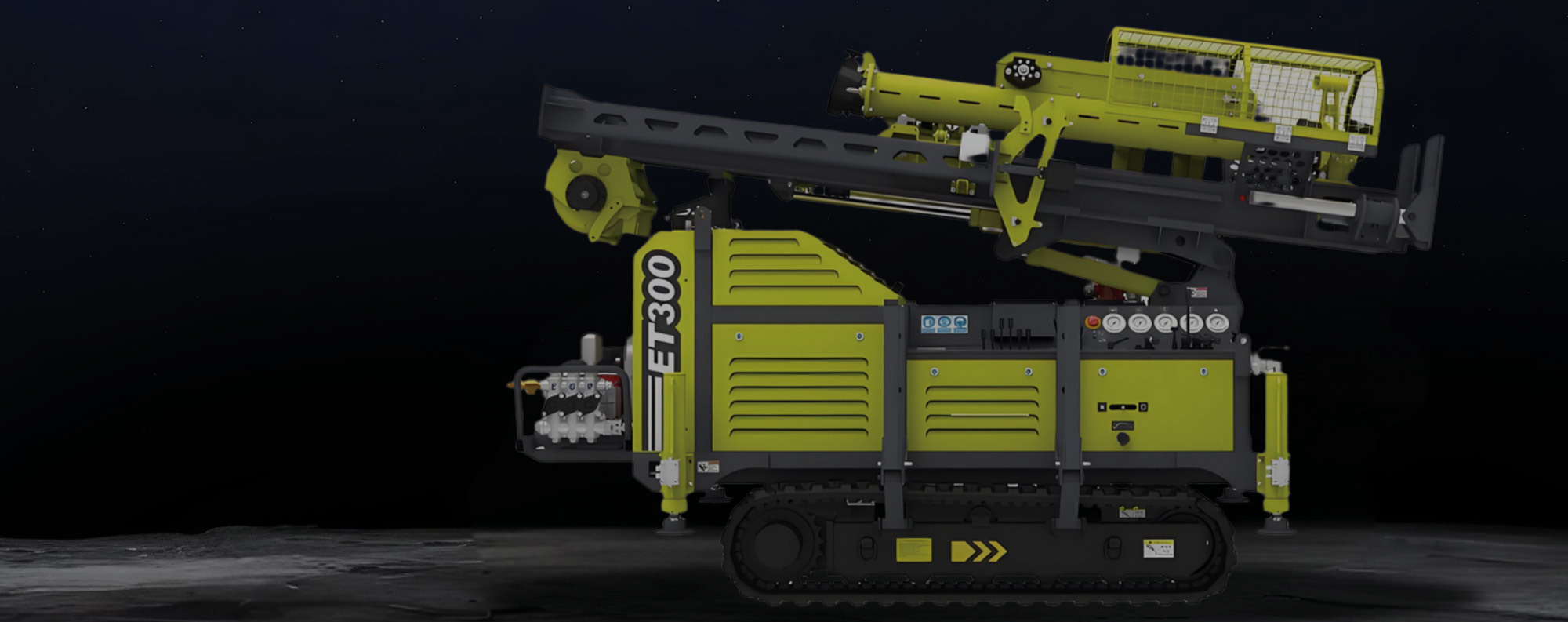
Integrated full-hydraulic core drilling rig
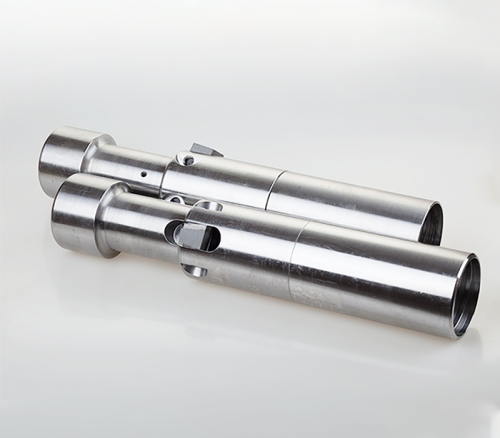
Double-tube core barrel
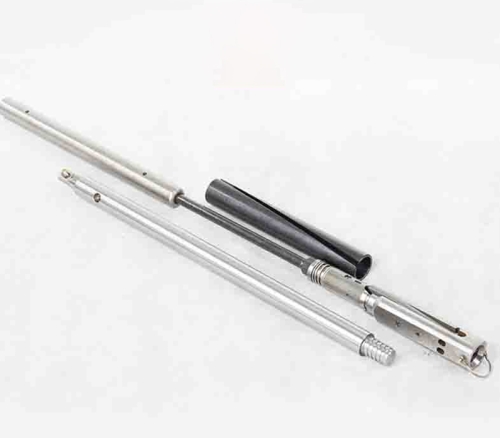
Core lifter (spring-type core breaker)
Stable drilling fluid (mud) circulation
These four core technologies work together to form a system engineered specifically aroundcore fidelity, enabling modern core drilling rigs to achieve unprecedented levels of high-fidelity sampling.
To achieve high-fidelity core recovery, the drilling rig must first offerstable, precisely controllable, and smooth operating behavior. This is the greatest advantage of a fully hydraulic coring rig over traditional mechanical rigs. In the core-fidelity system, the rig is not merely a “power source,” but thestability anchor that determines whether drilling stays smooth, disturbances remain controlled, the inner tube stays safe, and the core remains undisturbed.
Traditional mechanical rigs rely on mechanical transmission, which often results in:
Large RPM fluctuations
Noticeable vibration and impact
Strong response to formation feedback
Difficulty limiting torque spikes
These instabilities transmit directly into the drill tools and the core, causing additional disturbance during cutting, feeding, and core formation.
A full-hydraulic rig performs completely differently:
Continuously adjustable RPM: real-time fine tuning with no abrupt jumps
Linear and controllable feed force: prevents “over-pushing” and core compression
Smooth torque delivery: hydraulic damping protects inner tubes
Fast torque reversal: reduces risk of jamming and vibration
This level of controllability ensures stable drilling across various formations and is the fundamental prerequisite for high-fidelity coring.
The rig’s transmission system, base, mast, and hydraulic circuit are built as a single integrated structure. Compared to multi-component rigs, this design provides:
(1) Greater rigidity → more stable drilling
Fewer joints and fewer loose components result in lower vibration and minimal axial deviation, ensuring uniform forces on the core.
(2) More direct power transmission
Minimal losses, low delay, and reduced shock mean smoother cutting and less shear disturbance to the core.
(3) Longer equipment life and consistent operating behavior
Mechanical stability across the entire drilling cycle results in predictable drilling behavior and controllable impacts on the core.
Any excess vibration, shock, or torque fluctuation introduces additional cutting or friction damage to the core. Hydraulic rigs optimize power curves and damping so that drilling becomes:
Low-noise
Low-disturbance
Low-impact
Hydraulic cushioning, stable oil flow, soft-start feeding, and shock-free braking all contribute to creating an ideal environment for preserving core structure.
Formation variability is the biggest threat to core fidelity:
Soft layers → easily crushed
Fractured zones → core falls apart
Hard layers → excessive shock disturbs the inner tube
A hydraulic rig can instantly adjust RPM, feed, torque, and pump rate, allowing the system to stabilize itself in real time. Mechanical rigs simply cannot match this responsiveness.
In summary, hydraulic rigs solve the root cause of core damage:unstable mechanical disturbance.
By delivering:
Stable power
Precise control
Low vibration
High adaptability
High structural rigidity
they establish the operating environment needed for double-tube tools, core lifters, and mud systems to function effectively.
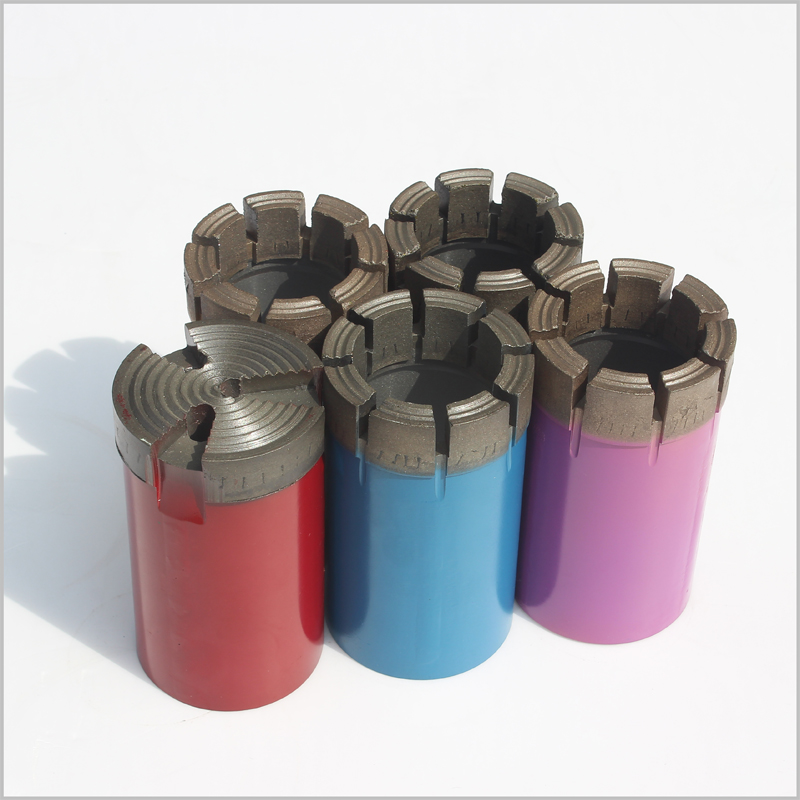
Among all technologies affecting core fidelity, thedouble-tube core barrel is the one that directly determines whether the core remains in its original condition.
Its purpose is simple:
Keep the core as undisturbed as possible—no rotation, no extrusion, no flushing.
The double-tube system serves as a protective chamber that allows the core to form in a nearly static environment.
In single-tube coring, the inner tube rotates with the drill tools. During entry, the core is subjected to:
Rotational shear
Friction and extrusion
Direct mud flushing
This results in:
Core breakage
Empty barrels
Back-filled debris
Disturbed structure
Double-tube tools were designed to eliminate these issues completely.
The outer tube cuts and rotates;
the inner tube remains still or rotates minimally.
This means the core forms in a static state, preserving:
Bedding
Fractures
Natural structure
Physical properties
High-end tools usedouble-layer (double-wall) core tubes, consisting of:
Inner core tube
Outer protection tube
Buffering cavity between them
Benefits include:
Very smooth core entry
Vibration absorption
Torque isolation
Complete separation from drilling fluid
Superior performance in fractured zones or weak formations
They reduce:
Rotational disturbance
Friction damage
Mud flushing
Vibration transmission
Risk of losing fragments
Particularly effective in:
Strongly weathered soft rocks
Fractured or jointed formations
Soft-hard interbedded strata
Water-bearing or sandy layers
Bottom line:
The double-tube tool is the core physical mechanism that determines true high-fidelity core recovery.
Stable drilling and double-tube protection alone are not enough.
The final key moment is when drilling stops and core retrieval begins.
The core must:
Break cleanly
Break at the correct point
Avoid random cracking or slipping
This is the job of thecore lifter, also known as the core breaker or core catcher.
Mounted at the bottom of the inner tube, the core lifter works like automatic gripping jaws:
Open during drilling
Close when triggered
Grip the top of the core
Enable a clean break at the formation
Secure the core during lifting
Without a core lifter, cores may:
Fall back into the hole
Break irregularly
Mix layers
Result in short or empty runs
Lose structural features
Key stages:
1)Open: during drilling, no obstruction to core entry
2)Trigger: via upward pull, reverse rotation, or mechanical activation
3)Break and Hold: lifter closes, grips the core, forms a clean break
The break plane is neat and undisturbed.
Prevent random fracture
Stop core slippage
Preserve natural fractures
Minimize vibration during lifting
Perform exceptionally in soft, fractured, or water-bearing formations
Especially beneficial in:
Fractured zones
Sandy interlayers
Weathered soft rock
Jointed formations
Water-bearing weak layers
Double-tube protectsduring entry;
Core lifter protectsduring extraction.
Together they achieve uninterrupted, full-process, low-disturbance core protection.
For many people, drilling mud is merely a medium used to *cool the bitor *carry cuttings*.
But in high-fidelity core drilling, the value of the mud circulation system goes far beyond that.
It functions as a protection mechanism that runs throughout the entire drilling process:
Stabilizing the borehole wall
Controlling hydraulic conditions
Reducing mud disturbance
Minimizing tool vibration
Assisting in forming high-quality cores
In essence, the mud system is the *buffer and stabilizerthat bridges rig power, drilling tool action, and formation response—playing an irreplaceable role in ensuring core integrity.
In core drilling, mud performs three indispensable basic functions:
1) Stabilizing borehole walls – preventing formation collapse
When drilling through loose soils, soft clay, or fractured zones, the borehole wall is extremely prone to collapse.
Mud forms a filter cake and provides hydrostatic pressure, keeping the borehole stable and ensuring a safe environment for core recovery.
2) Cooling the bit and outer tube
During cutting, friction causes significant temperature rise, which may lead to:
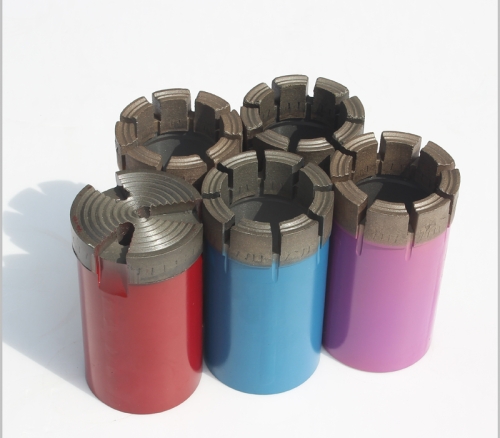
Bit sintering and premature wear
Expansion of the outer tube, squeezing the inner tube
Thermal alteration of the core
Continuous cooling keeps the drilling tools operating smoothly.
3) Carrying cuttings and keeping the hole bottom clean
A clean bottom means:
Core surfaces are not re-abraded
Core structures are not clogged by cuttings
The core lifter (spring catcher) can break the core cleanly
All contributing to higher fidelity core recovery.
Mud properties—particularly density, viscosity, and sand content—have a direct effect on the physical state of the core.
1) Low density → borehole instability
Collapse introduces foreign material into the inner tube, contaminating or mixing with the core.
2) Excessive density → excessive pressure on the core
In soft rock or fractured formations, high-density mud may:
Compress the core
Destroy original pore structures
Cause “paste-like” core deformation
This compromises lithologic interpretation and physical testing.
3) High sand content → abrasion of core surfaces
During long runs, sand-rich mud repeatedly scours the core, resulting in:
Surface texture damage
Blurred stratification
Premature breakage of weak layers
Thus, a quality mud treatment system and strict mud control are essential for high-fidelity coring.
In a double-tube system, mud typically flows:
Down through the drill rods → out through bit water ports → returns upward along the annulus.
Key design principle:
Mud never enters the inner tube and remains completely isolated from the core.
Benefits include:
No hydraulic scouring of the core
No destruction of surface features
No disturbance to soft formations
Preservation of natural joints and fractures
This is a crucial supporting mechanism enabling high-fidelity double-tube core recovery.
Even with stable hydraulic power, cutting still creates instantaneous reaction forces.
Mud in the annulus acts like a “hydraulic damper,” helping to:
Absorb micro-vibrations from the bit
Reduce short-term jumping of the drill tools
Lower vibration caused by friction between tools and borehole
Ensure smoother rotation of the outer tube
This stabilizes the inner tube and minimizes core disturbance.
1) Fractured zones – preventing debris inflow and keeping the hole bottom clean
Clean bottoms are essential for maintaining core structure.
2) Swelling soils & mudstone/shale – preventing hydration softening
Proper mud properties reduce water absorption and deformation before the core enters the inner tube.
3) Sand-bearing formations – reducing sand mobility
Adequate viscosity suppresses sand movement, improving core formation stability.
4) Interbedded hard–soft layers – balancing hydraulic transitions
Prevents hydraulic shocks when the bit shifts from hard to soft layers, protecting core integrity.
The mud system does not directly *formthe core. Instead, it:
Provides the most favorable hydraulic environment for core formation, stabilization, entry into the inner tube, and retrieval.
It functions as:
The environmental stabilizer
The power coordinator
The disturbance protector
The shock absorber
The formation adaptive regulator
It is the foundational technology enabling high-fidelity core extraction.
Low-vibration hydraulic drive + double-tube structure with a stationary inner tube
Stable torque output paired with a non-rotating inner tube minimizes twisting forces on the core, preserving original bedding, joints, and structures.
Core lifter (catcher)–controlled breaking + uniform hydraulic lifting
The core lifter breaks the core at a precise point, avoiding tearing or shearing.
Hydraulic hoisting then lifts the assembly smoothly, allowing the core to enter the inner tube in its natural state.
Mud system maintaining bottom pressure and borehole stability
Proper mud weight and flow provide stable bottom pressure, preventing collapse, scouring, or hydraulic disturbance.
Three systems forming a closed-loop collaboration
Stable drive → precise breaking → controlled borehole conditions
Resulting in cores that maintain original geometry, sequence, structure, and integrity throughout drilling, breaking, and retrieval.
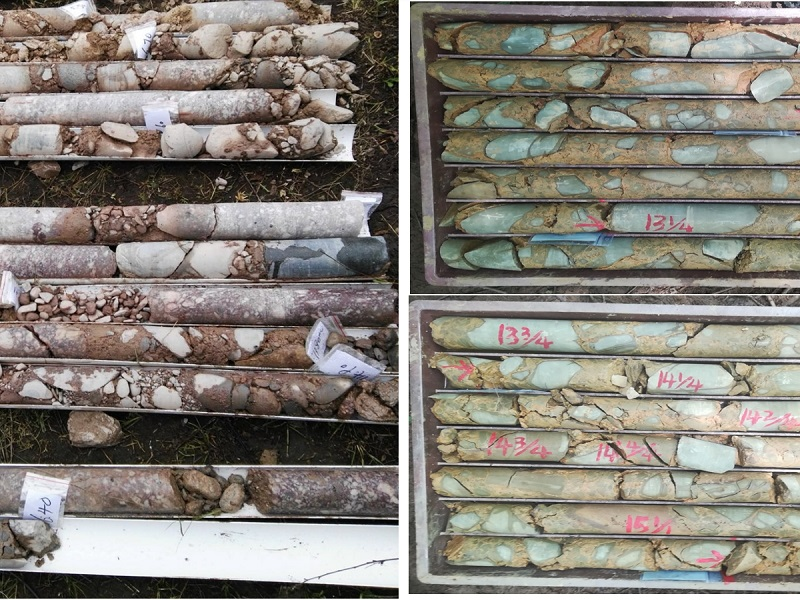
A core is not just a “sample”—it is the *primary data sourceof geotechnical investigation.
Its quality determines the reliability of design.
More accurate stratigraphic division, structural interpretation, and lithologic assessment
Clear bedding, weathering profiles, and fracture zones improve geological judgment.
More reliable bearing capacity, stability, and hydrogeological parameters
The closer the core is to in-situ condition, the more meaningful the test results.
Direct impact on site selection, foundation design, and risk identification
Authentic geological models reduce misjudgment and detect hidden hazards such as Fractured or weak zones.
Core fidelity = data quality = engineering safety factor.
Higher fidelity → lower risk → more reliable design.
High fidelity is not achieved by a single component.
It is a systematic outcome of:
Full-hydraulic coring rigs
Double-tube drilling tools
High-quality mud circulation systems
Only when equipment, tools, and procedures work collaboratively can we obtain cores with high recovery rates, high integrity, and high reliability—providing solid geological data for engineering design.


 English
  Español
 العربية